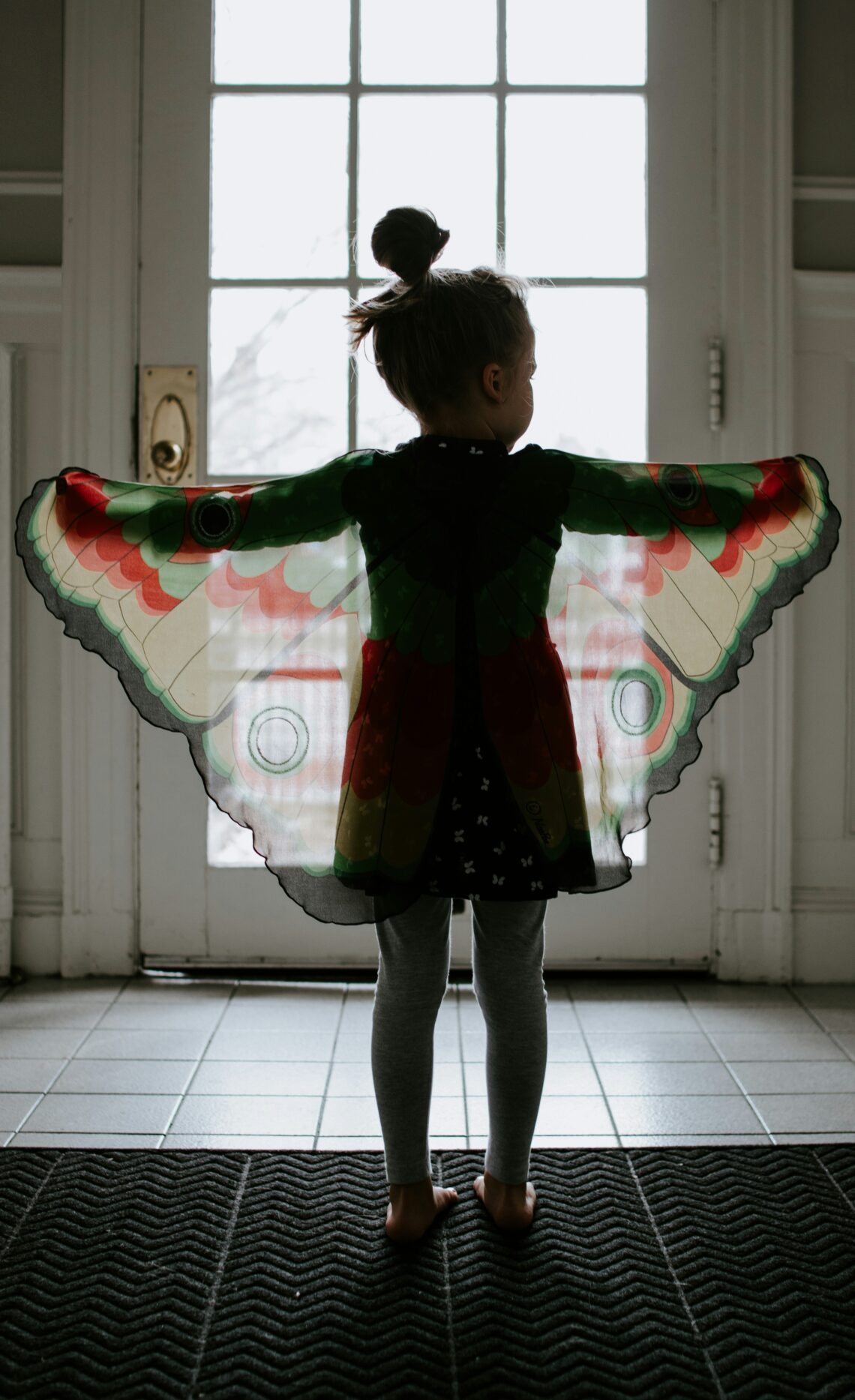
Picture this. A little girl, no older than four, playing alone in her room. With the precision of a stage director, she constructs the scene for her imaginary play. The main character is a Barbie doll with chewed-up feet and hair that has never known peace. Dressed in rags, Barbie is made to trudge up a mountainside (performed by a pile of blankets) in a raging blizzard (performed by a plug-in fan, turned on its maximum setting and positioned about six inches from Barbie’s face).
The little girl’s teeth chatter from the cold. She can barely feel her fingers, but she likes experiencing what Barbie must feel. In fact, she eats up every moment of the doll’s misfortunes with delight. Perhaps next time, Barbie should be injured, too. When her loved ones find her in such a pitiful state, then they’ll feel sorry for how they treated her.
Now, before you judge this child, remember that she’s only four. If you never threw yourself the occasional pity party in your youth, then congratulations. You’re a better person than me.
Because yes, that little girl was me. I’ve written stories in my head for as long as I can remember, and one of my first memories of doing so was marching my Barbie doll up an imaginary frozen mountainside.
I’ve often thought back to that version of myself, sometimes with judgment for the developing victim mindset that I still grapple with, but more often with compassion for how desperately lonely that little girl was. That’s part of growing up. Learning to respect the journey, with all its flaws, as you process what you’ve gone through with garnered wisdom.
More recently, however, I’ve looked back on that child with curiosity. With a touch of envy, to be honest. Because she had something I lost. A vivid imagination and the blissful ignorance that kept her from judging it too harshly.
My imagination served me well during childhood. By the time I learned to read and write, play sessions with Barbie no longer satisfied my need to weave stories. To this day, it still drives me nuts when a daydream exists only in my head.
So write I did.
As my parents raged and fought for days on end, I scribbled stories in notebooks about couples making up after a terrible argument. When my dad lost his job and my mom’s mental illness collapsed into a crushing years-long depression, I wrote about side characters coming to the aid of a troubled protagonist, who was in the throes of a tearful breakdown. From the ages of 10 to 14, I lacked consistent food supply, clean clothing that properly fit my developing body, and any crumb of guidance from a sane adult. But I did find comfort and stability in my stories. In fact, I learned to self-source much of what the world around me could not provide.
Unlike the real people in my life, the characters in my stories didn’t judge me. They were kind, recognized and confronted injustice, and most importantly, expressed the depth of love I knew had to exist somewhere in the world. Because hell, if it still existed inside my own heart after everything I had endured, surely it wasn’t a mere fantasy.
Looking back, I now recognize every character and story I’ve created represented the hope I had that things could get better.
I maintained that grip on hope into adulthood.
My parents were dysfunctional beyond belief, but they did love me and tried their best. They put me through college, where I met my husband. I’ve worked in accounting and benefits administration while developing my writing skills on the side. I gave birth to a set of boy-girl twins, have written several books, and, in general, enjoy a life that many would consider an enviable success. How’s that for a happy ending?
However, if you’ve known me throughout the years, you might have noticed the light dimming in my eyes much faster than it did in my youth. Perhaps it started when I realized my twins weren’t hitting their developmental marks, or when the people I went to for help only offered judgment instead. Or perhaps it was the death of my writing partner/best friend or the depression that followed. But I lost faith in other people, in God, and most devastatingly, in myself.
And what is a loss of faith but a loss of hope?
Now, hope is a dangerous thing. It leaves you vulnerable to disappointment and disillusionment, and when hope dies, it can truly feel like a part of you went into the grave alongside it. But while your dreams can be dashed to pieces by outside forces, you are ultimately the person who decides whether or not to set hope aside forever.
Hope never dies on its own. You are the one who digs its grave.
Ironically enough, it’s a sacrifice you make in the hopes of living a less painful life. It’s a coping mechanism. But that’s great news, because that means you’re also the person who gets to decide if your hope will be reborn.
My wonderful husband likes to offer this bit of comfort: Everyone, without exception, has something major to deal with in their lives. For one person, it’s the death or absence of a spouse. For others, it’s major financial problems, addiction, chronic illness, the list goes on. For us, it’s autistic twins and a lack of support.
I’ll tell you this: I’m a stronger person now. Doing the work to heal my trauma helped me to stop waiting for divine intervention and take charge of my life. I no longer look to others for support they’re either unable or unwilling to give. In other words, Barbie doesn’t need anyone to save her from the damn mountain anymore—you follow me? I’ve been my own savior from the beginning, after all. No one has ever dried my tears, loved, or validated me better.
In the end, I suppose my hope didn’t die after all.
I just placed it in the correct person: Me.
However, I’d be lying if I said I don’t miss who I used to be—that hopeful little girl who liked to tell stories about how she thought the world should work. I silenced her in order to cope with reality. I stopped telling stories when I lost faith in anyone other than myself. I suppose I could write books with only one character—a lone protagonist who doesn’t need anyone—but the very idea hurts my heart more than any flesh-and-blood person ever has.
Because here’s the thing. Living without hope causes far more suffering than clinging onto it against all logic or reason. The former is a slow, agonizing death—the self-inflicted stagnation of safety. The latter is a dangerous journey with high stakes, but whether your hopes lead you straight to soul-crushing defeat or rewards beyond your wildest dreams, at least you had an adventure. Sounds a bit like a good book, doesn’t it?
People need stories. A glimpse at kindness in the age of internet hate bots. A moment of feeling seen during a worldwide pandemic of loneliness. An escape into the mind of a protagonist who musters the strength to change something within themselves, and therefore begins to alter the world around them.
And I need to tell those stories because I have those things in my heart to give. They’ve always been there, screaming to be brought to life.
My name is A.E. Brennan—you can call me Aimee, if you’d like—and I’ve written stories since I was a little girl. My books are about flawed individuals with complex emotions, but they know how to love. And in the end, there is always, always hope. Because without that, there’s no story worth telling to begin with.
“I am not what happened to me. I am what I choose to become.” – Carl Jung
Featured Image: Photo by Kelly Sikkema on Unsplash