Author’s Note: I wrote this short story (~5,600 words) back in February after emerging from a three-year depressive period—an attempt to fall back in love with writing and to explore some of the darker emotions I’d been working through. The feeling that part of “me” had been erased or forgotten during my depression found its way into the prose as the character of August. The thing that broke me out of my depression was anger, which I personified as the character of Luca.
To anyone who’s struggling with depression, hang in there. There are a number of things that can help, but for me, it was getting active again. Forcing myself to participate in the life I was avoiding. That’s (indirectly) what this story is about.
I’ve loved vampires since the original Interview with the Vampire movie came out in 1994. (I was much, much too young to be allowed into the theater, but my wonderful sister, who is six years older than me, snuck me in.) After reading Anne Rice’s Vampire Chronicles, I later found Buffy the Vampire Slayer, The Lost Boys, The Hunger, the Sookie Stackhouse book series, which became True Blood, and so many other wonderful stories. Blade, The Dresden Files, Underworld, and don’t get me started about how much I love AMC’s new reimagining of Interview with the Vampire and The Vampire Lestat. I could go on and on.
My favorite vampire stories contain a deep exploration of humanity. This short story is no exception. Metaphors abound. I hope you like it.
The Devil And His Shadow
A Vampire Story
written by A. E. Brennan
The final night of Luca’s human life began with a murder.
Luca stood off to one side, pale as a sliver of the moon, expressionless as August hauled his victim into a sitting position on the cold concrete. The homeless woman’s eyes lolled back, the stink of piss and vomit thick in the air around her. Aside from her gurgling and rattling, the alley was quiet, devoid of any witnesses save for the rats. Only a lonely siren in the distance signaled the presence of another soul, but they were too far away to do the woman any good.
Within minutes, she’d be dead anyway. The overdose was already starting to take her.
The neon lights from a nearby bar flickered at random intervals, painting moving lines of electric blue onto August’s black hair. He was a tall man—or at least, something that bore the resemblance of one—with broad shoulders draped in a heavy wool coat and a slim body beneath. Deep shadows carved out the hollow, downward slashes of his cheeks, the elegant arch of his brow, the divot below his full lower lip, but the finer details of his features were lost to darkness.
August studied the contours of the homeless woman’s neck before he struck. He felt nothing when her body jerked to consciousness, roused by the unexpected lance of pain, nor when she began to thrash in his arms. Her blood was all that mattered. He held her still as he drank—strong and muscled as a python, unblinking, unfeeling—until the fight leaked out of his prey.
It didn’t take long. There wasn’t much fight to begin with. August could taste her despair—the same desire for oblivion that had led her down the path of addiction in the first place. A lone tear streaked down the woman’s cheek, carving a path in the muck, but as August lowered her body to the ground, he felt no obligation to wipe the wetness away.
His analytical side—all that remained of him, really—preferred to think of such incidents as mercy killings as opposed to cold-blooded murder. Luca, on the other hand, only called him lazy.
People can survive an overdose, Luca might have said on another night, his lips twisted into the most beautifully wicked smile August had ever seen. If you weren’t a murderer, you would have called an ambulance. It’d be more fun for us both if you killed someone who deserved it.
Amused by the thought, August spat the woman’s taste from his mouth and glanced back at his companion.
But Luca only stood there, arms crossed over his chest, shivering in his sweatshirt. He looked small, strangely innocent for all his wickedness, his wild, dark blond hair like a lick of honeyed fire beneath the streetlights. Though human, he had an otherworldly quality about him—like Pan or some other trickster brought to life—with a sharp jawline, cunning eyes, and lips prone to smirking. The bitter cold had kissed those lips and the tip of his nose red. He stared at the dead woman with a wooden expression—so unlike his normal, fiery self.
August’s amusement slipped a degree. A week ago, Luca had laughed himself sick when August strung up a pair of cocky financiers for him. They’d harassed the wrong waitress, who happened to be Luca’s sister. A month prior, it was the millionaire CEO of the insurance company who’d denied coverage of Luca’s treatment plan, stating new test results were too inconclusive to support his diagnosis. After that particular murder, the theatrics of which August never would have possessed the imagination for himself, Luca had danced through the streets with a bottle of champagne like he’d met the love of his life: vengeance.
But a year ago, when August had first encountered a then twenty-three-year-old Luca Valente huddled in a lonely cot in hospice care, he’d appeared much the same as he did now. Muted and still. A wisp of a flame that had grown small.
“Are you feeling all right?” August asked.
Luca stirred and looked up. The streetlight had leached all color from his eyes.
August couldn’t for the life of him remember what color those eyes were on a normal day. Irritated, he marched over and forced Luca’s chin up. The eyes were blue, but that wasn’t what August was looking for. Long, patient fingers enclosed the delicate column of Luca’s throat, feeling for the pulse that beat there, taking pleasure in the warmth that radiated from him, so unlike August’s own body.
Luca’s diseased blood marched a weary pace beneath the skin.
Slow. Much too slow. Then slower still.
“Shit,” August hissed.
Wincing, Luca pushed August’s hand away. “What’s gotten into you?”
An excellent question. It wasn’t as if they didn’t know this was coming. “You’re dying.”
“Oh, yeah?” Luca snorted and strode away without a backward glance. “Tell me something I don’t know.”
“You don’t understand,” August called after him. “I mean the blood isn’t working anymore.”
Luca froze mid-step. Turning, he locked eyes with August for what felt like an eternity, hovering overlong in the gap between hearing and understanding. As he teetered toward the latter, the sweet smell of fear laced with adrenaline bit the air between them.
Then the moment passed. “Well,” Luca said and shrugged as if someone had merely informed him about a nasty turn in the weather. “Shit.”
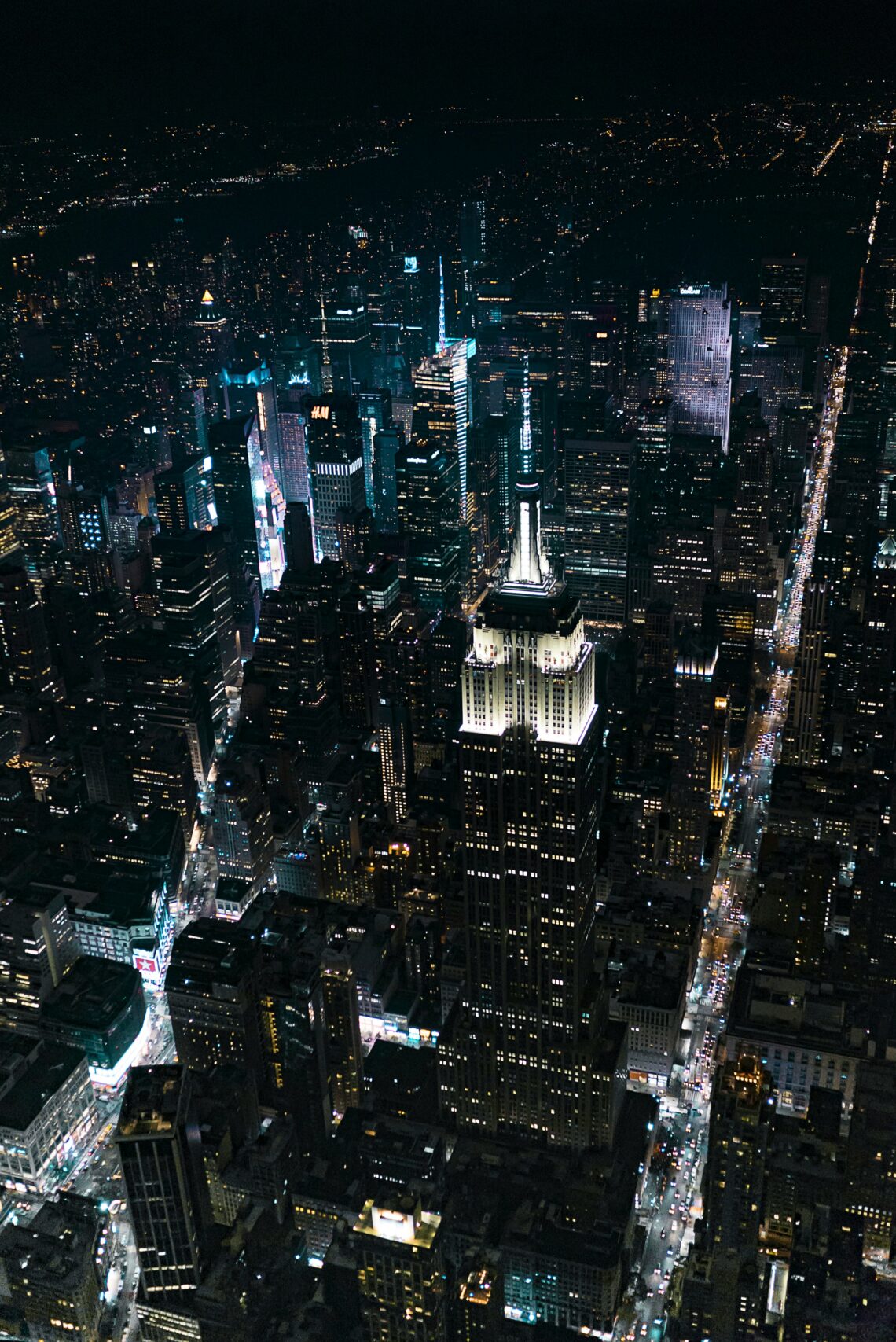
At Luca’s request, they crossed town and boarded a ferry that would take them up the East River—along Manhattan Island and beneath familiar bridges, the city skyline cutting a path of light into an otherwise black canvas. August supposed his companion meant to see the city with human eyes for what might be the last time, but Luca claimed he only wanted to feel the wind in his face.
“We were supposed to go to Amsterdam,” Luca muttered. He leaned against the ferry’s upper deck railing, his breathing labored from the stairs. Each exhale froze into a cloud that joined the creeping fog in the distance. “I wanted to see the cheese museum.”
“We still can, if you’d like,” August said, standing a step behind the boy. “After.”
Luca only pouted in response. “Will I even like cheese at that point?”
“That’s what you’re worried about? I’ll take you to a real museum. In Amsterdam, you’ll find Vermeer. Rembrandt. The Night Watch is a particular favorite.”
“Boo,” Luca said.
August’s laughter surprised him when it surfaced. He hardly thought himself capable of such things anymore. “Did you know some of the paintings of the great masters are living things? They breathe. Gaze back at you, like the artist wasn’t satisfied until a piece of their soul lay trapped in the paint. Your new eyes will be able to sense it, should you decide to undergo the change.”
That eerie residue of life fascinated him. Such mastery in painting was rare but undeniable. Even some humans, though certainly not all, were able to detect the phenomenon. The Mona Lisa drew millions to see it for a reason. Many scoffed and deemed the painting overrated, while others stared, unnerved, caught off guard by the artist’s life-force gazing back at them through the security glass.
August watched Luca in much the same way, fixated by what he couldn’t explain.
The boy was an imperfect companion, petulant and moody. Perhaps it was the raw purity of him that attracted August—the undiluted emotions that flared like a struck match, sudden and bright, a startling reminder of what he used to be. Even the simplest of human experiences was enough to make him stare, like witnessing Luca’s quiet frustration at having his eyes and nose leak uncontrollably in the cold. The boy evoked memories of caring enough to protect. Of hating enough to kill. Of being part of the world at all.
Luca made August want to study the great paintings again.
Even now, the boy glared at the city beyond the water with simultaneous hate and longing. Without him, August wouldn’t have noticed any of it. The scene before him had no background, no other characters in frame. The world was all darkness with Luca as the lone point of light. Even August had faded into the gloom. He might as well have been Luca’s shadow.
“You’re shivering,” August said. “We should go downstairs where it’s heated.”
“No,” Luca whispered, almost hatefully.
“Carissime,” August said with gentleness he thought himself incapable of. “You don’t have to go through with this. There’s nothing wrong with choosing a human death.”
“You’d like that, wouldn’t you? You’ve always tried to talk me out of it.”
“My opinion is beside the point. It’s your death. Your decision.”
“My death, my choice,” Luca echoed. “They should put that on a fucking bumper sticker alongside the abortion ones.” His gaze fell to his hands on the railing. “How long do I have left anyway?”
The boy wouldn’t last more than a week. August’s blood had never cured Luca’s disease, exactly. Vampire blood was only borrowed life. It could animate humans for a time—grant the illusion of health and vitality—but would ultimately fall short of healing a terminal illness. “Hard to say,” August replied. “Humans sometimes cling to life far beyond expectation. How long you live depends on your will to continue.”
“How long,” Luca bit out, “do I have?”
It was difficult to imagine such a fearsome creature dying at all. “By sunrise, I suspect you’ll be in much the same shape you were in when I first found you. But your symptoms will soon worsen. Your disease has progressed in spite of the blood I’ve given you.”
“Meaning I’ll be closer to death than I was a year ago, in hospice care,” Luca said.
“Yes.”
Luca’s breathing slowed as he did the math. Then he grew quiet. It didn’t matter if he lived another week. By tomorrow morning, he wouldn’t be able to rise from bed without assistance, much less dress himself. Eating would be impossible. Talking, too tiresome.
In the time since they’d walked onto the boat, he’d already started to decline. It showed in the slump of his shoulders, in the frozen breaths that barely had any momentum as they left his lungs.
“How old were you when you died?” Luca asked.
August’s vision went unfocused as he remembered events so ancient, they might as well have happened to someone else. “How old do I look?”
“Older than me, for sure. At least thirty.”
August huffed a laugh.
“That’s it?” Luca turned to glare at him with all the fury of Cabanel’s fallen angel. “You’re just gonna laugh and not answer my question? But I guess you never do, huh?”
Why did the boy care? August wasn’t the focal point of the painting. He was only there to observe. “I don’t know how old I was when I died because I don’t know my date of birth. That wasn’t uncommon when I was born, at least not for someone of my station. But if I had to guess, I’d say I was just shy of twenty-two.”
Whatever answer Luca expected, it wasn’t that. “Fuck off,” he said, so caught off guard that he almost choked on the words. “There’s no way in hell I’m older than you.”
“I suppose you are,” August said. “In a manner of speaking.”
Luca blinked several times in quick succession, eyes growing wet. He raked his fingers through his wind-whipped hair and whispered, “Jesus Christ. That’s a really fucking young age to die. Not even twenty-two.” He turned back toward the water, his breaths coming faster than before, pale hands gripping the half-frozen railing like a neck he wished he could strangle. “I wanted to make it to twenty-seven before I died.”
Luca had talked about it before. The 27 Club, he called it—the age young celebrities died after living too hard, too fast, too bright. Luca wanted his death to earn him a place amongst legends like Hendrix and Morrison.
“Didn’t you say they only inducted musicians into that club of yours?” August said, puzzled. “Besides, you’re only twenty-four.”
Luca shot him a dangerous glance. “I almost made it to twenty-five. And I could still be a musician one day. I could learn. There’s still time, isn’t there?” He leveled a finger in August’s direction, as if in accusation. “I’m going to be a vampire, goddammit.”
August studied him without blinking. If asked, he couldn’t have labeled a single emotion storming across Luca’s face, but all of them were terrible and beautiful to behold. “Of course there’s time, lux mea. All the time in the world, should you wish.”
But Luca wasn’t having it. He shoved away from the railing—away from August’s reaching hands—and started to pace. “All the time in the world, huh?” Luca’s eyes shone with unshed tears, a thousand times brighter than any city. “So why am I still this fucking scared?”
Luca did not care to be comforted.
His eyes remained red-rimmed while they moved through the city. A restless, manic energy overtook the boy, as if the knowledge that he’d run out of time had reignited his survival instincts. Luca’s inner fire burned bright once more—no sign of that small, guttering flame—but August had seen enough people die to know the end was perhaps closer than either of them expected.
Then again, maybe Luca did know, for he seemed hellbent on living that night to its fullest. And God help anyone who stood in his way.
First came grand larceny.
Luca, who shunned wealth and extravagance, tore through a stretch of Fifth Avenue luxury retailers like he meant to leave a permanent scar on them. A pair of combat boots from Louis Vuitton. A lambskin bomber jacket from Saint Laurent. A silk scarf tossed in August’s face at Gucci. Luca left a trail of belts, jeans, and sunglasses in his wake before he got bored and stuck with his plain, tattered Levis and Ramones t-shirt. A final spritz of Chanel cologne, which he then shattered on the storefront’s logo, and Luca’s shopping spree was finished.
Inside the store, the sales associates were all smiles as they assisted their customers, the front security guard alert but unbothered. Everything was business as usual despite the chaos around them. That was August’s doing. Luca wouldn’t let him pay for anything, so to avoid unnecessary trouble, August had erased the little devil’s crime spree from their memories. Far simpler to have an associate destroy security footage than to hand over a credit card and face Luca’s wrath.
Dressed half in finery, half in thrift shop hand-me-downs, Luca paused on the sidewalk to catch his breath. His eyes darted back and forth as he panted, searching for something he didn’t name. Then he was in motion again.
Intrigued, August followed.
Luca hated Times Square—absolutely loathed it to the point of spitting fury—but demanded to be brought there. August flew them up to the maintenance catwalk of a billboard overlooking the plaza, and they stood there, backlit by millions of pixelated LEDs that swarmed behind them like schools of fish. Unnoticed by all save one, Luca cursed and raged at the great throngs of people on the streets below, furious that they got to stay while he’d run out of time. August kept silent, his attention trained on his companion’s unlaced boots, which overlapped the catwalk’s edge. Were it not for the safety railing, Luca’s blind rage might have sent him tumbling.
Perhaps it was August’s imagination, but he couldn’t shake the feeling that the boy wasn’t screaming at the crowd at all, but rather challenging death itself. August could almost hear the underlying meaning of Luca’s tirade as his vocal cords began to tear from the strain. Do you honestly think I can’t outrun you? Outsmart you? I’ve beaten you for a whole fucking year already, you goddamn weakling.
When Luca’s voice inevitably gave out, his energy collapsed along with it. And suddenly he was small again, carved out by the emotions that had come blazing out of him. He looked like a child standing there, breathless and frightened, swaying on his feet either from the gusting wind or the realization of how high up they were.
August was ready to catch him if his knees gave out, but Luca only brushed him aside. “Take me home,” he rasped, his voice in ruins.
Home was a hole-in-the-wall pizza joint in the Bronx, one he often visited by himself, only August made a point of following him inside this time. He was wary of his companion’s sudden decline. Seated like a shadowed mountain beneath buzzing fluorescent lights, August watched while Luca struggled to eat, pale and shaking as he tried to maneuver the tip of a pizza slice into his mouth.
He’d ordered an entire pepperoni pie for himself, an absurd amount of food for a single person, but Luca was determined. He forced himself to eat a slice, one laborious bite at a time, taking deep, steadying breaths all the while. When he finished, he boxed up the remainder and cleaned their table, dutifully wiping every crumb and flake of red pepper into the palm of his hand before delivering them to the trash.
Then he left a five-thousand dollar tip for his sister, Tessa, and kissed her cheek as they prepared to leave.
“Where the hell did you get this kind of money?” Tessa asked, holding up the wad of cash in Luca’s face like it was crime evidence.
Luca didn’t seem to hear her. His complexion had gone stark white, beads of sweat dotting the skin above his upper lip. He sidestepped her, staggered for the staff bathroom in the back, and slammed the door behind him. August sighed when he heard the boy get sick.
Tessa turned on August then. She closely resembled her younger brother, though her hair was bleached and caught in a messy ponytail, pierced at the roots by the sharpened pencil she used to scribble down to-go orders. “You need to leave my brother alone, do you hear me?” she said, voice trembling. “I don’t know who you think you are—or what the hell you are—but I want you out of his life.”
As if August wasn’t the one keeping the boy alive to begin with.
“Calm down,” he said, inspecting the price tag that still dangled from the silk scarf around his neck. He pulled it cleanly away. “Place the money in your pocket and walk outside, into the alley behind the restaurant where no one will disturb you. You need a break.”
Tessa blinked and rocked back, as if overtaken by a strong gust of wind. Her pupils were unusually large beneath the bright, buzzing lights. She stuffed the money into her apron and walked toward the back door, muttering, “I need a fucking break.”
After she’d gone, Luca emerged from the staff bathroom, shaking and gaunt. He didn’t look around for his sister, but merely jerked his chin toward the front doors. “Take me to a museum.”
August was astonished the boy could still stand, much less speak. “Why?”
He would comply with the request, of course, regardless of the answer. But he was curious.
Luca wiped his mouth with the sleeve of his stolen jacket and said, “I want to see one of those paintings you told me about before, when we were on the ferry.” His eyes focused on August’s face, looking directly at him for the first time in more than an hour. “The ones that breathe.”
August wasn’t normally one for making a scene.
But that didn’t mean he couldn’t.
Shattered glass littered the museum floor like a glistening mosaic, droplets of blood speckling the walls and tiles while multiple sirens wailed in the distance. The doors of the MoMA were closed to the public for the night, but that was of little concern. Not when Luca wanted something.
It had started with a single security guard trailing after them when they’d forced the locks on a museum staff entrance. August dismissed him with a simple command, but others must have been watching. Then came the sirens, followed by more guards, half a dozen of them at varying intervals. August left them scratching their heads, confused but unharmed, as he and Luca progressed through the museum. But whoever was watching from afar was beyond the reach of August’s thrall. By the time they reached the fifth floor, which housed some of the paintings August wanted Luca to see, the actual police department had stormed onto the scene.
No matter.
In the corridor outside the 1890s-1940s gallery, NYPD officers stood frozen in time—frozen by August—weapons drawn, mouths agape, their shouted commands still contorting their faces. But no words rang out; the officers were choking on them. Underfoot was glass and pulverized marble from a destroyed display case, which August had shattered on the ground right in front of them as a final warning. Several officers were injured in the process, one openly bleeding from his forehead. He gaped at August with slowly dawning horror while blood dripped from his chin.
August crushed a police radio into silence and tossed it aside. “Behold,” he said, extending his arms to them all. “The Night Watch.” He gave a hard laugh.
Truly, Luca was a terrible influence on him. August left them there, his personal contribution to the museum as a thank you for their hospitality, and joined his companion inside the gallery.
Luca stood in front of Dalí’s painting, The Persistence of Memory, an acoustic guitar gripped in one hand. He’d stolen the instrument from a pawn shop near his sister’s work, if only to prove his prior point that he could be a musician if he put his mind to it. Luca only remembered one chord but swore he used to know a second. He’d strummed the same triad over and over but never found its resolution, no matter how much his fingers searched the surrounding fretboard.
Now he’d stopped trying altogether and held the guitar loosely by the strap, the bulk of its weight resting on the ground, as if it was too much for him. Another dream lost to time, one of many. They stood in a gallery surrounded by others.
Shoulder to shoulder, the devil and his shadow, Luca and August studied the surreal landscape of Dalí’s painting together.
Luca said, “Is it alive?”
“I suppose it depends on who you ask.” August pondered the composition. The bleak imagery—ants swarming on a pocket watch, a clock melting over an unrooted tree, a grotesque, fleshy form that resembled the artist’s face wilting in the foreground. Eyeing that hideous self-portrait, August asked, “Luca, what do I look like?”
Luca stirred and glanced at him, perplexed. “I guess you can’t see yourself in a mirror, can you? Hasn’t anyone ever taken your picture?” Luca had never taken one himself since he didn’t carry a phone. He hated those even more than he despised Times Square.
“I don’t appear in photographs.” At his companion’s surprise, August explained further. “I used to think it had something to do with the mirrors inside old cameras. But then the technology changed, yet I remain unseen, even on video recordings. My best guess is that it has something to do with the light. I don’t reflect it the same way you do.”
“So I’m the only one visible on the security cameras right now?” Luca asked.
“Until I ask the right people to destroy the footage, yes.”
Luca studied August as if he were the most fascinating object in the room—a ridiculous notion, given their location. “But even if you can’t be photographed, someone could still draw you. Paint you.”
August nodded, thinking back. “Yes, that sounds familiar. Perhaps I asked someone to once.”
“You seriously don’t remember these things?”
It wasn’t that August couldn’t remember. If he tried hard enough, he could take his mind back in time, through the endless drudgery of weeks and months and centuries, every day like the one before. The problem came from determining if it was his memory or something he’d witnessed in passing.
When August didn’t reply, Luca knelt to dip his finger in the wet, sticky blood they’d tracked in on their shoes. He rose and drew a face on the wall—a lop-sided oval with dots for eyes and a grim slash of a mouth. “There,” he said as he added two pointed fangs. “That’s what you look like.” Leaning in, he caught August’s bottom lip in a brief kiss. “You should smile more.”
They proceeded through the gallery, leaving forensic evidence all over that August couldn’t bring himself to care about. The bloody imprint of shoes, Luca’s fingerprints on the wall, not to mention the living NYPD sculpture in the corridor. The boy might find himself in a bit of trouble later, even if the surveillance tapes were successfully destroyed. August was not all-powerful. The people he enthralled could later remember, and some, like Luca, possessed the ability to resist him altogether. But August would protect the boy if that happened. Stamp out one issue at a time, slowly and deliberately, until those who wanted to make a fuss either gave up or died trying.
The moment his eyes fell upon Van Gogh’s painting, August stopped in his tracks. “That one there,” he said. “It’s alive.”
Luca dragged his feet toward The Starry Night with exaggerated skepticism, as if disappointed August would point out such a famous painting. But the longer Luca stood before the swirling blues and dappled yellows, the more words seemed to fail him. A full minute passed before he spoke. “I’ve seen pictures of that painting a million times. They put it on those stupid magnets they sell at the corner bodega back home. But that . . . that thing is fucking alive.”
“Photographs and recreations never do paintings justice.” August shrugged, a wry smile tugging at one corner of his mouth. “Perhaps, again, it’s something to do with the light.”
Luca hovered there for a long time. “I can see it. It has a . . . vibration. God, I sound like one of those New Age nut-jobs, but I swear, it’s buzzing.” His attention shifted to August. “That’s what you look like.” Luca gestured to the painting. At the ominous, dark cypress tree painted in the foreground, stretching upward like a black flame against the churning blue sky. “It’s like my brain—or my intuition, maybe—knows you shouldn’t be walking and talking and showing me around the fucking MoMA in the middle of the night. Like I know deep down that you should be nothing but dead paint. But then there you are.” Luca waved in August’s direction, as if it was all too much for him to comprehend. “Fucking staring at me.”
August’s head tilted to one side as he tried to understand.
“You scare me sometimes,” Luca continued, his voice shaking. “And I don’t mean all the murder and fangs and stuff. I mean, the way you seem so blank inside. Like you really are dead.” He swallowed hard, his eyes beginning to shine. “Will I be like that, if I undergo the change? Will I go blank, too?”
August didn’t have to clarify what Luca meant by the word blank. “I don’t know.”
“How can you not know?”
August just didn’t. “I don’t remem—”
“God-fucking-dammit!” Luca gripped the acoustic guitar by the neck and flung it across the gallery, the discordant crash of notes filling the air like bursts of color. “Just tell me what it’s like. Being a vampire. Being you.”
Being dead, he meant, but still animated.
“You’re having second thoughts,” August observed.
“How will I change? Will I still be me? Were you already like this when you were human—all fuzzy and confused about everything, like you’ve been sleepwalking for a century? Or did it happen after?”
August tried to remember—tried so hard that a headache sprang up between his eyebrows that he attempted to massage away with his thumb—until at last, a memory surfaced of a young man with warm olive skin, garbed in a rough tunic and stolen sandals, his chin lifted high, so defiant in the face of poverty that he’d renamed himself after a great emperor. August supposed that might have been him once upon a time, but the vision felt so distant that it was equally as likely that he’d read it in a book.
Luca wanted a direct answer, however, so August did his best. “I think . . . it didn’t happen right away. I was more daring and brash when I was human. And perhaps after I became a vampire as well.”
“So what changed you?” Luca asked.
Again, August was at a loss. Before Luca’s sheer relentlessness had forced August to stir from his waking dream, he hadn’t been aware he was sleepwalking to begin with. He’d forgotten that he’d forgotten. Dazed by the realization, August blinked and looked around. The room had grown bright and detailed. Vincent Van Gogh silently observed their conversation from within the mounds of paint.
“Something must have happened to you,” Luca said. “You really don’t remember?”
August remembered all of it. Millennia of losses. A family, a lover, even a child—dead before the little thing had learned to walk. (What was his name? Or . . . had it been a little girl? Yes, he’d named her after his mother.) Then came his own death, an abrupt separation from everything he knew or understood about the world. He’d blinked and fallen in love with an entirely new culture and way of life. Then blinked again, and it was dead and gone, too. Friends, reduced to dust. Lovers, lost to memory. Even the music and fashions of familiar times abandoned him, the slow degradation of any touchstone of what he used to be.
Loss after loss, each one a separate grief, another mound of dirt shoveled onto his walking grave.
“Time,” August said. “Time happened.”
Luca’s eyes narrowed at the reply. Not in anger, but as though he’d finally caught hold of a wisp of truth in an unending fog. “Did it hurt? When you became a vampire.”
August exhaled slowly, then said, “Like nothing you can imagine.” But three nights of agony, followed by the horror of clawing his way out of his own grave, was nothing compared to what happened in the centuries that followed. “You don’t have to do this, Luca. I know death is frightening. But life, when it’s gone on longer than it should, can be far worse. After a few thousand years, you could forget you’re alive at all.”
Luca went perfectly still, eyes widening. “A few . . . thousand?”
August had never answered the boy’s questions about his true age. “What do you think eternity is, mea anima? Do you suppose you cease to be when you lose track of what you think is old? Even my original language is dead. Consider how you might feel should you outlast anyone who speaks English? Everything you know—your sister, this city, every song and melody, even the person you think I am today—all of it will eventually disappear. And you will not.”
Luca swallowed hard, having trouble holding the intensity of August’s gaze. “So I’m supposed to choose between death and . . . a different kind of ending.”
“Your death,” August said, “your choice.”
Understanding flickered across Luca’s face, the deeper recognition of why August was the way he was. Why he chose to forget instead of succumbing to the weight of grief.
Luca’s death would add to that grief. Profoundly so, for who else could shine in such a way to reflect a shadow rather than dispel it? There were no good choices before the boy, not from August’s perspective. That tragedy was too painful to contemplate just yet, but he could feel it coming. A nail set to pierce through centuries of callouses to the pink, tender flesh underneath. The hammer was already poised to strike.
“I think perhaps I experienced happiness as well,” August said, because he couldn’t stand seeing the boy so distraught. “Even as a young vampire, before I became like this. I took lovers—dozens of them throughout the years, men and women alike, all of them beloved. I hoarded wealth, amassed properties and power, cultivated great galleries of art, painted works of my own. I’ve seen things you wouldn’t believe, Luca. I could show you.”
A glimmer of hope shone in Luca’s eyes.
Hope so beautiful, August didn’t dare dash it away, even though his conscience flared to life in protest for the first time that night. He was a monster, after all.
“Choose wisely, my love,” August said, deliberately speaking the endearment in English, and left it at that.
Later, after they’d left the bloodied museum behind, police lights still flashed outside the MoMA, visible from the neighboring hotel roof where August and Luca sat. The boy had said he needed air but barely drew any in, his breaths labored and shallow as his feet dangled over the ledge.
Though Luca still stubbornly clung to life, his head rested on August’s shoulder like it weighed more than the earth itself. “The pain is coming back,” Luca whispered. His fingers loosened their grip on his broken guitar and tightened instead on the fabric of August’s sleeve. “I don’t know if I can handle that pain again.”
August stared straight ahead but saw nothing. His body tensed, braced for the hammer’s fall. “What do you want me to do?”